Tuesday, January 7, 2014

Taking a Bullet For Conservation: An Estate of Hope (An Excerpt)

An excerpt from "Taking A Bullet For Conservation: The Bull Moose Party--A Centennial Reflection 1912-2012," by Jim Posewitz. (Published by Full Circle Press, 2011 and distributed by Riverbend Publishing.)


The day President McKinley died, Theodore Roosevelt was sworn in as president of the United States. He delivered his first message to Congress on December 3rd. Biographer Edmund Morris describes a portion of that speech:

“Then striking a note altogether new in presidential utterances, Roosevelt began to preach the conservation of natural resources. He showed an impressive mastery of the subject as he explained the need for federal protection of native flora and fauna. Urgently, he asked that the Bureau of Forestry be given total control over forest reserves, currently parceled among several agencies, and demanded more presidential power to hand further reserves over to the Department of Agriculture.” Roosevelt recognized that “. . . conservation of natural resources . . . had not yet dawned on the public mind.”

The effort to change those conservation perceptions in the public mind began with his first message to Congress and eventually included seven national conferences on the subject. A man of action as well as words, Roosevelt’s administration waded into securing a public land estate destined to be a protected estate for wildlife, fish, forests, open spaces, and those Americans who value nature and outdoor amenities. For those who appreciated those amenities, it became an estate of hope. Roosevelt described a philosophy that immediately became his method of operation.

“I declined to adopt the view that what was imperatively necessary for the Nation could not be done by the President unless he could find some specific authorization to do it. My belief was that it was not only his right but his duty to do anything that the needs of the Nation demanded unless such action was forbidden by the Constitution or by the laws.”

That philosophy, coupled with the 10-year old “Creative Act” now in the hands of one of its creators, enabled the president to get right to protecting forests, watersheds, wildlife, fisheries and other public resources. As president, from September 1901 to march of 1909, Roosevelt compiled the following record: 

• Expanded the forest reserve system from 43 million acres to 194 million acres;
• Started 30 irrigation projects;
• Saw the National Monument Act become law;
• Created 18 National Monuments including Niagara Falls and the Grand Canyon;
• Added five new National Parks to the system;
• Established game ranges in Oklahoma, Montana, Arizona and Washington; and,
• Established 51 Wildlife Refuges.

When the 7-1/2-year old presidential whirlwind subsided, 230 million actress had been set aside for conservation of natural resources and for Americans to enjoy. It was 359,375 square miles, roughly equivalent in size to the combined areas of Delaware, New York, Maine and Texas. It was just shy of 10 percent of America. When he finished, he told us why he did it:

“The things accomplished that have been enumerated above were of immediate consequence to the economic well-being of our people. In addition certain things were done of which the economic bearing was remote, but which bore directly upon our welfare, because they add to the beauty of living and therefore to the joy of life.”

It worked. When those words were written, America’s antelope population hovered around 5,000 now there are over a million. Wild turkeys had faded to about 100,000; they now number well past 4 million. White-tailed deer numbered about one-half million, and their population now is over 30 million. When Roosevelt was scouring remote western wild lands for elk, the nation had about 40,000; today, they too exceed 1 million and are back in Wisconsin, Pennsylvania, Kentucky, Tennessee, Michigan and Arkansas. 

Midway through America’s Conservation Camelot, in 1904 Roosevelt had to stand for election to the presidency. The tension between Roosevelt and his own party that began in Albany simply escalated as Roosevelt’s meteoric career carried him into the White House. The nature of that relationship was well articulated by a New York Sun editorial before the 1904 Republican Party convention. The Sun, described by biographer Edward Morris as a “banner journal of business conservatism,” editorialized: “Roosevelt steps from the stage gracefully. He has ruled his party to a large extent against its will.” The Sun’s editorial then went on to single out Roosevelt’s conservation record writing:

"A vote is like a rifle: it's usefulness depends
upon the character of the user."
-- Theodore Roosevelt 1913
“And, then, there is the great and statesmanlike movement for the conservation of our National resources, into which Roosevelt so energetically threw himself at a time when the nation as a whole knew not that we are ruining and bankrupting ourselves as fast as we can. . . This globe is the capital stock of the race . . . Our forests have been destroyed; they must be restored. These questions are not of this day only or of this generation. They belong all to the future.”

The editorial concluded with a rhetorical question: “What statesmen in all history had done anything calling for so wide a view and for a purpose more lofty?”

The wonder is that he accomplished it “against the will” of both his own party and also his partisan opponents. While Wall Street and special corporate interests struggled to find ways to resist Roosevelt’s 1904 nomination, he went on to win the election by the largest margin in American history up to that point. The people loved him and what he was doing for the country. Political party bosses and special interests would have to wait for a venue other than and open vote of the people to purge the reform-minded Theodore Roosevelt. . .

. . . The current political struggle over America’s natural resources continues with each new generation. In the 1912 election, the American conservation ethic was basically abandoned by the political party that once had a progressive component responsible for its birth. This political orphan, however, found a home 20-some years later when our nation was plagued by an economic depression and a drought-driven dust bowl in the “Dirty-Thirties.” In the depth of those desperately hard times, conservation was once again politically embraced by a Roosevelt. This time is was Democrat Franklin D. Roosevelt.

Conservation became part of the New Deal and the Soil Conservation Service and the Civilian Conservation Corps programs were among a new wave of conservation reforms. Another critically important aspect in the emergence of serious conservation in America was the creation and support of citizen-driven nongovernmental organizations. It was a necessity recognized early by the giants of conservation who were also battling from within the government. George Bird Grinnell formed the first Audubon Society in 1886. One year later, in 1887, he co-hosted the dinner with Theodore Roosevelt that became the genesis of the Boone and Crockett Club.

When the Taft administration was capitulating to the corporate resource raiders, the recently fired Gifford Pinchot gathered like-minded conservationists and formed the National Conservation Association. The mission of this later organization was “Figure out how to restore the world that Roosevelt had constructed.” In a democracy, a pattern of individual people taking action recurs.

When Franklin D. Roosevelt re-energized conservation within government in the 1930s, a similar resurgence of energy occurred in the nongovernmental sector. The National Wildlife Federation, Ducks Unlimited, The Wilderness Society, and others emerged in that difficult and dirty decade. It is how democracy works, and it may be the only way the wild things we value can be sustained from one generation to the next. We can take a lesson from this conservation heritage story: The necessity for all of us to participate in the public affairs within a democracy. It we take time to look, history teaches us the importance of being both politically critical and also personally active.

Fish, wildlife and the clean, wild places they need to survive, never had a vote. Those of us who value them have to do it for them.

Let’s observe the 100th anniversary of the Bull Moose Party, and the years that follow, with vigorous advocacy on behalf of America’s fish and wildlife resources. We can do it in honor of that original Bull Moose, Theodore Roosevelt, who challenged us to become the person:

“ . . . who at the best, knows in the end the triumph of high achievement, and who, at worst, if he fails, at least fails while daring greatly; so that his place shall never be with those cold and timid souls who know neither victory nor defeat.”
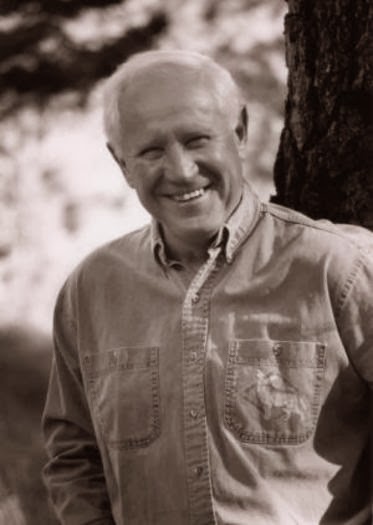


Retired from a 32-year career with the Montana Department of Fish, Wildlife & Parks, Jim Posewitz is the Founder and Executive Director of Orion: The Hunter's Institute; an Adjunct Professor of History and Philosophy at Montana State University; an avid and passionate hunter, angler and conservationist, and (in addition to "Taking a Bullet for Conservation") is the author of: "Beyond Fair Chase: The Ethic and Tradition of Hunting," "Inherit the Hunt: A Journey Into the Heart of American Hunting," and "Rifle in Hand: How Wild America was Saved."  He is also a long-time friend, mentor and inspiration to me and many others who strive to follow the tremendous example he sets to carry on our conservation legacy.  


Saturday, December 14, 2013

Neuter the NRA

December 14, 2012 was my 52nd birthday. In more than a half-century of living, I never felt such deep sorrow, anger and confusion as I did that day. That was the day a 20-year-old man shot and killed his mother then drove to Sandy Hook Elementary School in Newtown Connecticut, shot his way through a glass window, entered the school and shot and killed eight boys, 12 girls (all between the ages of six and seven) and six women who worked at the school. He shot his victims multiple times (he shot one boy 11 times) then shot and killed himself.

He did all this in just 10 minutes, firing hundreds of rounds from his mother’s Bushmaster XM15-E2S, a 5.56mm semi-automatic rifle that fires about 45 rounds a minute. It’s basically a civilian model of the M16-A2 I was issued in the Marine Corps without the fully-automatic capability.

The incident hit me harder than even 9/11. As horrific as the attacks on the World Trade Center and Pentagon were, I could at least make sense of why terrorists would attack us. It’s more difficult, if not impossible, to make sense of the Sandy Hook massacre. Like many Americans, I’ve tried to make sense of it all. I think of it often, particularly when I help my son get ready for school; wrestle, play and laugh with him; watch him put on his backpack, walk out to and get on the school bus, and immediately miss him and look forward to when he gets home.

But what if he never came home? What if me and his mom received a call later in the day to inform us that our beautiful, smart, wonderful happy son was brutally and horrifically murdered at school, his body ripped to shreds by bullets, along with 19 of his classmates and six adults? I can hardly bring myself to even think about it.

The people of Newtown lived it, and they will likely re-live it every day of their lives. They will never see their children again. I don’t know how they cope.

I doubt it’s something our nation’s founders could even fathom back in the days of muskets when they crafted the 2nd Amendment to the Constitution.

Having served in a Marine Corps Force Recon unit and being a hunter, I have spent a good amount of time around guns; I am very familiar, effective and proficient with a variety of deadly weapons. In the Marines I was issued various rifles for different tasks, most all of them specifically designed to fire a lot of rounds quickly and efficiently kill a lot of people in a short amount of time. The NRA likes to claim that “guns don’t kill people, people kill people,” and a person inclined to kill could kill people with a baseball bat. True. But nobody can kill 26 people in ten minutes with a baseball bat. This is why I was issued M16s, MP5 HK 9mm submachine guns, M60 machine guns, M203 grenade launchers and other potent, deadly weapons in the Marine Corps and not baseball bats.

I’m not so naïve as to blame a gun for what happened at Sandy Hook. There’s obviously more to it than that. There’s no doubt mental health issues were involved as well as the unfortunate dark side to human nature and behavior. But the gun played a role; a huge role. It enabled a 20-year old man to kill 26 people in 10 minutes.

Do we Americans have too easy access to deadly weapons? Would we, as a society, be safer if we further controlled access to firearms and banned certain weapons? Would it be a violation of our Constitutional rights to do so?

The NRA and the gun and ammunition industry accuses those of us who promote further gun restrictions in response to Sandy Hook as exploiting tragedy for political gain. I disagree. I think we have a moral obligation to examine such issues and do whatever it takes to try and prevent such a horrific tragedy from ever happening again. I don’t pretend to have answers, but as a society we should and must collectively have rationale, reasonable discussions about such issues. But the NRA stifles debate through bullying, fear tactics and perpetuating lies and distortions of truth. (See Lies and Distortions from the NRA)

The NRA does an admirable job at promoting the safe, responsible use and handling of guns. There was a time they were a rationale, reasonable organization. But they have grown into an arrogant, uncompromising political powerhouse that defends the rights of people to own pretty much any sort of weapon they desire -- not because of Second Amendment rights, as they deceptively claim, but because they have become an arm of and public relations firm for a huge, powerful, wealthy and influential gun and weapons manufacturing industry. They have purchased our Congress to do its bidding through money, threats and intimidation. It's about profit, not the Constitution. And so they feed people lies, distortions, and misconceptions to rally flag-waving, so-called "patriots" to protect industry profits under the guise of "Constitutional rights."

Despite the fact that Presidents as diverse in views and policies as Gerald Ford, Jimmy Carter, Ronald Reagan, George H.W. Bush and Bill Clinton supported stricter background checks to purchase guns and bans on certain types of weapons, the NRA and gun industry now viciously attack any politician who even suggests such legislation and accuses them of being “anti-Americans” trying to “destroy” our Constitution and American way of life.

But there have and always will be restrictions on Second Amendment rights. Even our nation’s founders, who crafted and approved of the amendment, often fervently disagreed on it. Constitutional scholars, politicians, and others have had many rationale, reasonable, heated debates over it ever since. I am not allowed to have an M60 machine gun, an M203 grenade launcher, an M1 Abrams tank, a LAAW (Light Anti Tank Assault Weapon), Stinger anti-aircraft missile or a nuclear warhead. Those all seem like reasonable restrictions to me. We all draw the line somewhere. Where does the NRA and its supporters draw the line? And why is it they think that wherever they chose to draw the line is what the rest of our nation should accept -- and that any restrictions that cross their line is unConstitutional? Our founders were smart enough to establish a Constitution that could adapt with changing times, and they set up a process in which we the people could collectively change things through a democratic, legislative process. To further adapt and refine our 2nd Amendment is not a violation of Constitutional rights.

But the NRA and gun and ammunition industry have hijacked the system and effectively silence debate through money, threats and intimidation. The current NRA leadership even defies the wishes of their own members. A poll of NRA members conducted last summer by GOP pollster Frank Luntz showed that NRA members and gun owners overwhelmingly support background checks and other common-sense measures that would help keep guns out of the hands of dangerous people and keep Americans safe. Yet the NRA – no doubt following orders from the industry – fought viciously against common sense regulations that most Americans support and desire.

The NRA and gun and ammunition industry have controlled our Congress for too long. It’s time for all Americans to speak out. We need to demand that our elected officials listen to we the people. We need to show the NRA and gun and ammunition industry that they don’t run this nation – we do! It’s time to neuter the NRA.

Thursday, December 12, 2013

The Rocky Mountain Front Heritage Act: Moving Our Legacy Forward

You’d be hard pressed to find a healthier, more ecologically sound example of our conservation legacy than the Rocky Mountain Front – a rugged 200-mile overthrust wall of steep, reef-like mountains rising from the Great Plains alongside the communities of Augusta, Choteau, Dupuyer, Pendroy and Browning. Elk, bighorns, pronghorn, badgers, wolverines, lynx, mountain lions, wolves and an abundance and diversity of other wildlife thrive on this land; Clear, clean rivers sustain some of the last remaining healthy populations of westslope cutthroat trout; Grizzlies still wander out onto the plains like they did when Lewis and Clark came through; The U.S. Fish and Wildlife Service has declared it the “top one percent” of wildlife habitat remaining in the Continental U.S., and it provides some of the best hunting, fishing and other outdoor recreational opportunities in the nation.

Always a scared place for the Blackfeet Nation, the Front remains a remarkably special place today -- and that didn’t come about by accident or lack of effort.

This legacy dates back to 1913 when – in response to pressure from hunters, anglers and others – Montana legislators created the Sun River Game Preserve, setting aside 195,877 acres of critical elk habitat in the upper reaches of the Sun River drainage. Years later, hunters and ranchers set aside their differences and worked cooperatively to establish a zone for Sun River elk to winter where they wouldn’t raid haystacks and knock down fences. In 1947, in a deal brokered by hunters, one rancher sold 20,000 acres of prime elk winter range to the state now known as the Sun River Game Range,  a wildlife management area administered by the Montana Department of Fish, Wildlife and Parks (FWP). In the 1950s, hunters, anglers and wildlife officials and others rallied to keep oil and gas exploration and a missile site out of the preserve.

The legacy continued through the 1970s with the creation of the Ear Mountain and Blackleaf Wildlife Management areas to protect elk, mule deer and grizzly habitat. Throughout the 1980s, 1990s and up until today the Coalition to Protect the Rocky Mountain Front, the Montana Wildlife Federation (MWF), Trout Unlimited, Montana Wilderness Association, The Nature Conservancy, National Wildlife Federation and other organizations have worked cooperatively with local ranchers, outfitters, guides, county commissioners, tribal leaders, businessmen and others to stop irresponsible gas and oil development within areas critically important for wildlife.     

This legacy also provides benefits to other places. Over the years, state wildlife officials have used bighorn sheep from the Sun River herd to re-establish the species in many other parts of Montana. With westslope cutthroat trout – Montana’s state fish, and a sensitive species of concern – still persisting along the front, fisheries biologists are tapping into this genetic pool in ongoing efforts to restore the subspecies to other parts of its original range.  

Threats to this special place persist, but we have a significant opportunity to continue this great conservation legacy by supporting and helping ensure the passage of the Rocky Mountain Front Heritage Act.  MWF is among more than 20 hunter and angler-based conservation organizations, including Trout UnlimitedBackcountry Hunters and Anglers, and the Theodore Roosevelt Conservation Partnership to support the Heritage Act.

“Hunters really started to get the connection between good, unbroken habitat and restoring game populations one hundred years ago when they lobbied for the Sun River Game Preserve, the first of its kind in Montana,” says Gail Joslyn, a retired FWP biologist who spent most of her career working along the Front. “It’s what makes the Front so special, and why we need our representatives to help us finish the work that we began so long ago.”

Sponsored by Montana Senator Max Baucus, the Heritage Act would establish a Conservation Management Area on 208,160 acres of Forest Service and Bureau of Land Management lands that would be managed to keep things the way they are while protecting these lands from unwanted changes such as excessive motorized use and road building. Activities such as hunting, fishing, hiking, camping, outfitting, chainsaw use, firewood gathering, cutting of trees for posts and polls, motorized recreation, mountain biking and grazing would continue to be allowed as they are now. In addition, the Heritage Act would add about 67,000 acres to the Bob Marshall, Scapegoat and Great Bear Wilderness complex to protect these lands from potential threats while allowing for the continuation of hunting, grazing, outfitting and other traditional uses. The Heritage Act would also prioritize the eradication and control of noxious weeds on about 790,000 acres of land. 

“The Rocky Mountain Front is a sportsmen’s paradise and considered worldwide as a crown jewel of the West,” Sen. Baucus says. “We have an obligation to protect our outdoor heritage for our kids and grandkids. It’s also critical for our economy to protect the treasures that bring people to Montana to open businesses, work, live and raise their families here. This is a balanced bill and a great example of a Montana-made proposal future generations will be proud of.”

The legislation is based on extensive public discussion, input and support from a variety of people of diverse backgrounds and interests who have set aside their differences to accomplish a common goal: To keep the Rocky Mountain Front as it is. An endorsement from the Great Falls Tribune called the Heritage Act, “politics as the art of the possible,” stating: “The measure embodies the ‘art of the possible’ by drawing and redrawing lines and allowing uses that have been painstakingly worked out with the folks who use the area the most.”

Many locals agree:

“My family has been ranching here for 128 years,” says Karl Rappold, a rancher from Dupuyer who has been fighting for years to protect the Front. “The Heritage Act will help protect the Front’s wild lands and working landscapes for generations to come.”  

Roy Jacobs, a hunter and taxidermist from Pendroy, shares similar thoughts. “I truly believe that the Rocky Mountain Front Heritage proposal is one of the most thoroughly thought out plans I have ever seen,” he says. “It doesn’t offend anyone or any group in any way. It truly leaves one of the world’s grandest remaining landscapes intact for future generations to experience and enjoy.”

The Heritage Act took a major step forward this past November when it was unanimously approved by the U.S. Senate Energy and Natural Resources Committee. The legislation will soon be brought before the full Senate for consideration. If passed it will then be brought before the House where Montana Rep. Steve Daines remains undecided in regards to the Heritage Act.

To ensure the continuation of our tremendous legacy it’s up to all of us to urge our elected officials in Washington DC to support the Rocky Mountain Front Heritage Act. As Choteau hunter and outfitter Dusty Crary said the day the legislation cleared the Senate committee: “The Heritage Act has been custom-tailored to meet the needs of traditional uses while also protecting the beauty of the Front for future generations. It took a lot of work to get this bill just right, and I hope today’s bipartisan momentum can carry it forward to the finish line for us.”

To learn more about the Rocky Mountain Front Heritage Act and what you can do to help, check out The Coalition to Protect the Rocky Mountain Front’s website at:  http://www.savethefront.org


An avid hunter, angler and wildlife advocate, Dave Stalling has worked for the U.S. Forest Service, the Rocky Mountain Elk Foundation, the National Wildlife Federation and Trout Unlimited. He is a past two-term president of the Montana Wildlife Federation, a founder of Hellgate Hunters andAnglers in Missoula and a recipient of  the Les Pengelly Montana Conservationist of the Year Award. He lives in Missoula. 

Monday, December 2, 2013

The Eagle and the Bull Trout: In Inadvertently Killing one Threatened Species, I had Fed Another

On a long solo trek through the wilds of northern Montana, I spent a rainy night camped under several large, protective spruce trees on the northwest side of a large lake where the shore is surrounded by dense willows and swamp, and fell asleep listening to the eerie, lonely cries of loons.

Awakened by the heat of the sun warming my tent, I hung everything out to dry and, on a whim, decided to push through the willows, wade through the swamp where the grass was chest high and the mud several feet deep in spots, to check out where a stream empties into the lake. Sitting on a log on a gravel bar at the inlet, an apparently anxious bald eagle screeched at me from her nest 40 yards or so away, and I could hear her eaglets chirping away. I found a large, fresh pile of grizzly shit full of thimbleberry seeds on the gravel near the willows, and watched several large cutthroats in the deep water near the end of the gravel bar, occasionally darting out into the current, or up to the surface, to snatch up whatever nymphs, mayflies, gnats or other morsels the river carried out to them. I went back to my tent, put together my four-piece rod, attached the spinning reel, grabbed my box of lures, and returned.

The fish were only interested in insects, it seemed, and mostly ignored my spinners. It was one of those times I would have had more luck catching dinner with a fly rod, drifting imitation mayflies or nymphs. But I was hungry, and those fish looked appetizing, so best make do with what I had. I took off my clothes, waded out up to my chest, and cast a heavy silver Blue Fox Vibrax out as far as I could and let it sink, with the hopes a fat trout may lay out there somewhere wanting to eat something more substantial than a bug. I retrieved the spinner slowly, holding my rod up high, varying the speeds so the lure might drop and rise and flutter a bit, looking like a wounded minnow. Then it stopped, and I quickly pulled the rod back to set the hook, hooking into something, but nothing moved.

Damn, I thought, I must have snagged a log or rock.

With only a handful of lures in my box, I have a personal policy that when I snag bottom, and exhaust all other means of freeing it, I put the rod down, dive in, follow the line and retrieve the spinner, no matter how deep or cold. It had clouded up again, and I was chilly, and I didn’t want to swim. But I didn’t have to. What I thought was a log began to move, stripping line from my reel and my rod doubled over. This fish was big. There’s a strange adrenaline high to fighting a fish (more for the fish, I suppose, since it’s the only one actually fighting for its life) and you become singly, intensely focused on the moment – which is partly why fishing is so popular, and why big fish usually make for better tales. It’s even more exhilarating to hook into a big fish while naked, in the midst of wild country, where there’s the highly unlikeable but fun-to-think about chance a grizzly might charge out of the willows and make a meal of me before I was able to eat whatever was on the other end of my line.

I’d put up a bit of a fight, I suppose, flap around in the shallow water as the bear drug me up onto the gravel, suffering perhaps as much pain as I was causing this fish, and the griz would gut me, eat me and brag to his buddies, holding his paws out as wide as he could, “He was this big!”

No one would believe him.

When I finally worked the fish to where he was flapping around in the shallow water, he was indeed big, 20” or more, and a bull trout. My excitement turned to guilt. It’s illegal to kill and eat bull trout, and illegal to intentionally catch them; they are listed and protected under federal law as a threatened under the Endangered Species Act. If you catch one, you need to release it. More conscientious anglers, or those fishing for fun not food, uses barbless, single hooks to cause less damage and ensure the fish survive; my treble hooks are barbed. I don’t want to treat fish like yoyos, for my personal amusement; I want to eat them. I reached into the water, held the tired fish, carefully removed the hooks, then held him lightly with both hands, his face into the current, until he gained back enough oxygen, strength and energy to give a push or two with his big tail and swim away on his own. But he didn’t go far. He floated to the surface, where the current started taking back out into the lake, flapped around a bit, went under, then back to the surface again, then down, then back up, several more times until finally he floated belly up dead. By then he was a good 50 yards or so out to where I could barely see him.

I had killed a threatened species! What else to do but hide the evidence by running it through my digestive system? I dove in and swam, a modified freestyle stroke, keeping my head up above water like when I was a lifeguard so as to not lose sight of the victim. About half way, as cold as the water was, I began wondering if I would soon be belly up myself, with the fish, and I thought of the irony that if my body were found people would think killed myself, as I had departed on this lengthy adventure in a bad state of mind.

I should write a letter, I thought, a sort of non-suicide note, and leave it in my tent: “I did not kill myself. I died, as friends always suspected I would, from my own bullheaded stupidity. Please submit my story for a Darwin Award.”

When I was about five yards or so from the dead fish, I felt a sudden rush of wind above my head and everything darkened around me. Wings, giant wings, and talons, sharp talons, right above my head, close enough to touch, moving fast, impressive, intimidating, a rare sight generally reserved for the last few seconds in the lives of unfortunate rabbits, grouse, ducks and other small prey. The eagle rushed past and crashed into the water just ahead of me, the spray from the splash hitting my face. She sunk her talons into the fish and began flapping her wings, up and down a few times, flapping harder, having difficulty getting off the water with such a heavy load, but she finally did it, gained ever more momentum, lifted from the lake, fish secure in her grip, and I watched her circle around and deliver what was going to be my supper to her fledglings in the nest by the gravel bar.

In inadvertently killing one threatened species I had fed another; and so it was noodles yet again for me. I barely made it back to shore, drained of energy and chilled to near hypothermia. I put on my clothes, hurried back to the tent, and climbed into my sleeping bag. When warmth returned, I laughed out loud, and random thoughts danced through my head. Like this:

Sometimes I will shake willows along lakes and streams and watch trout eat the bugs that fall of the branches. When a grizzly walks through the brush, alongside lakes and creeks, does he unwittingly knock bugs into the water that feed the trout he may eventually eat? Or help fatten up some bull trout for eaglets?

Thursday, October 17, 2013

Fifty Years of Wilderness

1964:  The Beatles released their first album; Plans to build the World Trade Center in New York were announced; the Vietnam war was beginning to escalate; Dr. Martin Luther King won a Nobel Peace Prize and President Lyndon B. Johnson signed the Civil Rights Act.

On September 4, Johnson signed another significant bill into law – a bill that took 60 drafts and eight years to pass through Congress: the Wilderness Act of 1964.  

Next year marks the 50th anniversary of the act.

Written by Howard Zahniser of The Wilderness Society as the culmination of a long national, grassroots effort to protect what remained of our nation’s wild places, the Wilderness Act created the National Wilderness Preservation System, which has since grown to nearly 110 million acres of wilderness managed by four agencies in 44 states and Puerto Rico.

The Wilderness Act succinctly and poetically defines wilderness as:

“A wilderness, in contrast with those areas where man and his own works dominate the landscape, is hereby recognized as an area where the earth and its community of life are untrammeled by man, where man himself is a visitor who does not remain.”

President Lyndon B. Johnson signs the Wilderness Act
With its roots dating back to 1910 – an extension of the conservation policies put in place by the likes of President Theodore Roosevelt -- three U.S. Forest Service employees were pivotal in pushing forth the concept of setting aside lands as wilderness: Bob Marshall, Arthur Carhart and Aldo Leopold

"For unnumbered centuries of human history the wilderness has given way. The priority of industry has become dogma,” wrote Leopold. “Are we as yet sufficiently enlightened to realize that we must now challenge that dogma, or do without our wilderness?"

Zahniser put it this way: “I believe that at least in the present phase of our civilization we have a profound, a fundamental need for areas of wilderness - a need that is not only recreational and spiritual but also educational and scientific, and withal essential to a true understanding of ourselves, our culture, our own natures, and our place in all nature.” 

Tuesday, September 3, 2013

Myths, Lies and Bullshit from the NRA

Having served in a Marine Corps Force Recon unit and being a hunter, I have spent a good amount of time around guns; I am very familiar, effective and proficient with a variety of deadly weapons. I've also been working to counter the National Rifle Association (NRA)’s bullshit for many years. Here's some of the biggest lies, distortions, myths and misconceptions they spread:

BULLSHIT: We need guns to defend ourselves against "bad guys." 

TRUTH: For every "bad guy" killed with a gun in our nation about 40 innocent people are killed. Many of these deaths involved kids involved in gun accidents. Statistically, people are far more likely to be killed by keeping loaded guns their homes, unless they are well-trained in the safe handling and use of firearms -- which most most gun owners are not. (It seems those most eager and ready to use guns have never actually been involved in gun-related violence; in reality it's not the macho, bravado, masculine experience they think it is, and as is often portrayed in movies.)

BULLSHIT: "Guns don't kill people, people kill people.' You can kill people with a baseball bat as easy as a gun. 

TRUTH:  It's a hell of a lot easier to kill a lot of people quickly with the right choice of weapons. Nobody can kill 22 kids in less than five minutes with a baseball bat. It's a lot easier to kill people when you have a weapon designed and made to efficiently kill lots of people in a short amount of time. This is why I was issued M16-A2 rifles, HK 9mm submachine guns, M60 machine guns, M203 grenade launchers and other potent, deadly weapons in the Marine Corps -- not baseball bats.

BULLSHIT: "We need guns to defend ourselves against a tyrannical government." 

TRUTH: Do people really think so little of our men and women in uniform to think they are like robots who will turn on their own friends, family and citizens when ordered to? As a Marine veteran, I find that pretty insulting. And in the highly unlikely (nearly impossible) event that a "tyrannical" U.S. government turns on us do people really think they can defend themselves against a modern Marine Corps, Army, Navy and Air Force? They better quickly arm themselves with a big arsenal of machine guns, grenades, grenade launchers, mortars, anti-aircraft missiles, tanks, air craft carriers, fighter jets, drones and other weapons; get themselves in good shape and start studying and training hard.  Even then, my money is on the Marine Corps; I sure wouldn't want to go against them, and I’m a highly-trained Marine. The real and actual threats of current gun violence seems more urgent than far-fetched delusions of a tyrannical government turning against us. Go dump tea in Boston harbor if you want, but let's face and deal with reality instead of indulging in paranoid fantasies.

BULLSHIT: Any and all restrictions on guns violate of our Constitutional rights. 

TRUTH: There have and always will be restrictions on Second Amendment rights. Even our "founding fathers" who crafted and approved of the amendment often fervently disagreed on it. Constitutional scholars, politicians, and others have had many rationale, reasonable, heated debates over it ever since. I would have to meet stringent requirements to own an M60 machine gun. I am not allowed to have an M203 grenade launcher, an M1 Abrams tank, a LAAW (Light Anti Tank Assault Weapon), Stinger anti-aircraft missile or a nuclear warhead. Those all seem like reasonable restrictions to me. We all draw the line somewhere.

Where does the NRA and its supporters draw the line? And why is it they think that wherever they chose to draw the line is what the rest of our nation should except --  and that any restrictions that cross their line is unconstitutional?

There is no legitimate reason for citizens to own weapons designed and made to rapidly kill a lot of people in a short amount of time. The risks and dangers to our nation and innocent people far outweigh any benefit that can possible be gained. The NRA defends the rights of people to own pretty much any sort of weapon they desire -- not because of Second Amendment rights, but because they have become an arm of and public relations firm for a huge, powerful, wealthy and influential gun and weapons manufacturing industry. They have purchased our Congress to do its bidding through money, threats and intimidation. It's about profit, not the Constitution.

And so they feed people lies, distortions, misconceptions and bullshit to rally flag-waving, so-called "patriots" to protect industry profits under the guise of "Constitutional rights."

The saddest part: That so many ignorant Americans believe them and serve as their pawns.

Friday, August 30, 2013

Grizzlies Saved My Life

It happened on a chilly August morning in a high-mountain meadow about seven weeks into a ten-week, 1,000-mile solo backpack trip through the most remote, rugged, wild country left in the continental United States. (I had left from my front porch in Missoula, Montana, and was on my way to Waterton, Alberta, traveling mostly off trail, crossing only three roads along the way.)

I lay safely hidden behind a downed, subalpine fir tree watching a silver-tipped sow grizzly and her two cubs about 100 yards or so upwind of me. She was lying down, resting, keeping watch of her young ones as they wrestled, rolled and chased each other in the grass. The cubs ran and pounced on their mom a few times and she nudged them away with her snout. When one cub tried to suckle her she swiftly swatted the youngster with her powerful big paw, in a seemingly effortless motion, and sent the startled cub rolling. Then she got up, walked over, and reassuringly licked the cub until all seemed well in the world.

I departed on this big, wild adventure deeply depressed and wasn’t so sure I planned to return. A few drunken nights prior I drove to a trailhead with my Remington Model 870 12-guage shotgun planning to walk a ways into the woods and pull the trigger with barrel in mouth. Instead, I sat in my car thinking of my son, my family and my friends, sobbing so hard I was shook until I passed out. I awoke at sunrise and drove back home.

I still struggled with father’s death the fall before and my wife of 14-years demanded divorce; I had grown too damn miserable to live with. Years of accumulated shame, guilt, fear, confusion and sorrow was rumbling throughout me like thunderous dark clouds ready to let loose a dangerously potent storm. As a leader in the wildlife conservation realm I was commonly praised for my straightforward honesty while secretly hiding a dishonest life. I was living a lie, suffocating beneath a deep internal avalanche, and I hated myself. Turmoil ate away at me like cancer. So, as I have often done in my life, I escaped to the wilds.

When I first I retreated to the wilds of Montana fresh out of a Marine Force Recon unit I developed a particular fondness for and connection to grizzly bears. They’re beautiful, powerful, fascinating, potentially dangerous animals that are gravely maligned and misunderstood. Some people hate them and many fear them because they don’t know and understand them. They’re bears. They are what they are; they do what they do. They want to (and should be) given respect, space and left alone to live and be themselves. I’ve dedicated most of my life fighting to protect wildlife and wild places always with this thought in mind: If we save enough room for grizzlies, which need a lot of space, we pretty much keep entire watersheds and ecosystems intact that sustain an abundance and diversity of species – including us.  As Doug Seus, founder of Vital Ground (a national nonprofit focused on the protection of critical grizzly habitat) succinctly puts it: “Where the grizzly walks, the earth is healthy and whole.”

Such thoughts and more buzzed around my brain as I watched that sow and her cubs in that high-mountain meadow on that chilly August morning. Then it struck me: I had spent so much time alone in the wilds because in the wilds I could truly be myself. In nature, in the wilds, there are no societal-created norms, judgments and expectations. Everything is what it is. A grizzly might judge me as a threat or feast but doesn’t care who I fall in love with and sleep with. I was fighting to defend and protect wildness, naturalness and the freedom of wild grizzlies while denying and suppressing my own wildness, naturalness and freedom. Like the grizzlies, I am what I am and do what I do. I want to (and should be) given respect, space and left alone to be myself. I accepted myself that day while watching those magnificent and tenacious animals. In no small way, those bears helped save my life.  (I often joke with friends that grizzlies made me gay.)

Henry David Thoreau wrote, “In wildness is the preservation of the world.”  Wildlife and wild places preserve truth and reality of life, death, and our primeval connection to this Earth. To deny that is to deny ourselves; to destroy it is self-destruction. To embrace, understand and accept it is to embrace, understand and accept our own innate nature and wildness.

Everything is what it is; including us. We are part of it all. We ignore that at our own peril. I learned that from wild grizzlies, in a wild high-mountain meadow, in a truly wild place. 

Let’s keep it wild.