|
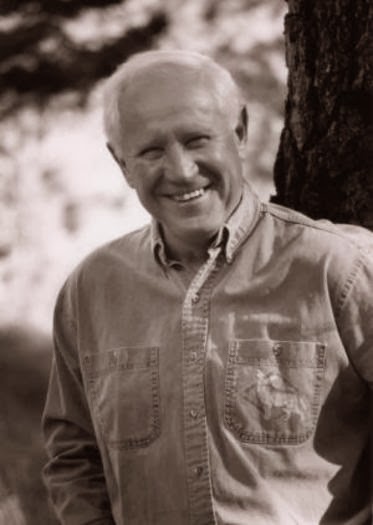
| Photo by Bob Knoebel |
There’s no doubt where Jim Posewitz stands. Since retiring in 1993 from a distinguished 32-year career as a biologist with the Montana Department of Fish, Wildlife & Parks, Jim has been a fierce, untiring advocate of America’s distinct wildlife and hunting heritage – showing us where we came from, where we’ve gone astray, and what we need to do to get back on track.
His first book, Beyond Fair Chase: The Ethic and Tradition of Hunting, has become the bible on proper and ethical conduct for hunters, influencing thousands of young hunters in hunting education classes across the continent. His next book, Inherit the Hunt: A journey into the Heart of Hunting, outlines the history of North America’s hunting and wildlife heritage, its democratic roots, and the growing, dire threats of privatization and commercialization of wildlife and hunting. His third book, Rifle in Hand: How Wild America Was Saved, delves even deeper into the history of North America’s conservation movement, led primarily by hunters, and makes for the perfect follow up – the final in a must-read trilogy for anyone who hunts, desires to hunt or just want to understand hunting. And as a bonus, check out Jim's latest: Taking a Bullet for Conservation: The Bull Moose Party - A Centennial Reflection 1912-2012.
“This hunting tradition and the conservation ethic within that tradition covered a lot of ground before it got to us,” Jim wrote in Inherit the Hunt. “This legacy did not come to our generation to die. To keep it alive, we must learn the stories, we must appreciate their significance, and we must teach each successive generation how this heritage was delivered into our custody.”
Jim tell lots of stories, significant stories, stories that all of us who hunt and care about wildlife should read and share and learn and pass onto to others. In Jim’s words: “Stories that helped me understand the value of hunting in America.” Through his stories, Jim takes people along on a notable journey of recurrent, important connections to George Perkins Marsh, Theodore Roosevelt, Aldo Leopold, Jay “‘D’ing” Darling and many others. More importantly, he shows us that we all have such connections, we all have similar stories – we are all part of this remarkable legacy.
Until I met Jim Posewitz, I never paid much attention to such connections. Like how I spent a childhood, and then some, chasing striped bass along the shores and islands of Connecticut’s coast – just a short boat ride away from where, in 1842, a common oysterman helped define the public ownership of wildlife in America; or how I grew up in the same state where, 1896, there initiated a Supreme Court case firmly establishing the notion of wildlife being held “as a public trust for the benefit of all people.” I developed a love for wildness playing in tidal estuaries just down the coast from estuaries where Theodore Roosevelt once roamed and developed his notable fondness for wild things. Like Aldo Leopold, I studies forestry and moved West. Like Roosevelt, I developed a passion for chasing wild elk through truly wild country and became, like him, a wilderness hunter. Like Roosevelt and Leopold and George Perkins Marsh and Alfred Aldrich Richardson and Jay “Ding” Darling and Jim Posewitz . . . and hundreds and thousands of other hunters through the course of our Nation’s history, all across North America, whose conservation ethic derived from appreciation gained through arduous pursuit of fish and game.
Jim sums it up nicely: “Hunting was
the passion driving people who committed themselves to the task.”
Like Jim, “I took to the hunt because somewhere within my nature throbbed the rhythm of the chase . . . to satisfy the urge I wandered wild places . . . I killed and savored the gift of wild things.” And in the countless hours and miles of unpredictable wild adventures chasing magnificent creatures such as stripers and elk and deer, I’ve come to deeply cherish the animals and the places they roam. Kindled by the chase, my devotion to wildlife sparked my concern their well-being and their habitat.
These are our roots. This is our legacy. These are the primeval connections that bind our heritage – vital connections between predator and prey, between wild things and humans, between conservationists past and present. We abandon these connections at our peril; we must come to nurture and understand this heritage because, as Jim Posewitz says, “What we understand we can honor and sustain.”
Perhaps the most valuable lesson I’ve come to understand from Jim is the crucial importance of the arduous pursuit – the “doctrine of the strenuous life,“ as Roosevelt put it, “skill and patience, and the capacity to endure fatigue and exposure, must be shown by the successful hunter.”
Like Jim, “I took to the hunt because somewhere within my nature throbbed the rhythm of the chase . . . to satisfy the urge I wandered wild places . . . I killed and savored the gift of wild things.” And in the countless hours and miles of unpredictable wild adventures chasing magnificent creatures such as stripers and elk and deer, I’ve come to deeply cherish the animals and the places they roam. Kindled by the chase, my devotion to wildlife sparked my concern their well-being and their habitat.
These are our roots. This is our legacy. These are the primeval connections that bind our heritage – vital connections between predator and prey, between wild things and humans, between conservationists past and present. We abandon these connections at our peril; we must come to nurture and understand this heritage because, as Jim Posewitz says, “What we understand we can honor and sustain.”
Perhaps the most valuable lesson I’ve come to understand from Jim is the crucial importance of the arduous pursuit – the “doctrine of the strenuous life,“ as Roosevelt put it, “skill and patience, and the capacity to endure fatigue and exposure, must be shown by the successful hunter.”
Unfortunately, there is
an ongoing quest to make hunting easier, quicker, with more sure-fire results,
changing the fundamental relationship between predator and prey. A look through
most any hunting-equipment catalog shows a plethora of technology available to
the modern-day hunter, including trail-monitoring devices to photograph, record
and store animal movements; game scanners; hearing enhancers; night-vision
goggles; range finders; animal scents; ATVS with gun mounts and thousands of
other gadgets designed to increase our chances of finding and killing wildlife.
Several years ago, hunters in Idaho were shooting elk from a half-mile away
using .50-caliber rifles mounted on off-road vehicles. A game warden from
Wyoming once told me that every year, more and more hunters use airplanes to
locate elk, radioing their sightings to friends on the ground. Some so-called
hunters simply pay to kill fenced, domesticated animals on game farms. In
Texas, hunters commonly lure deer into automated bait stations and then shoot
them from luxurious towers. More recently, some hunters started using drones.
(Backcountry Hunters and Anglers is leading the charge to ban the use of drones
for hunting and scouting.)
When hunters seek easier ways, focusing only on results and skipping the process (or, as Roosevelt put it, those who are “content to buy what they have not the skill to get by their own exertions”), they fail to gain the intimacy, knowledge, appreciation and respect for the prey, for the habitat, and for other wildlife that is gained through arduous pursuit. The connections are shattered. I suspect this growing disconnect is, in large part, why some hunters are either apathetic or outright opposed to policies that protect and enhance wildlife and wild places; they either ignore, or never really come to understand, our hunting and wildlife heritage.
Several years ago, over a beer or two, I shared with Jim a story of frustration. While working to protect wild places, some fellow wilderness advocates often chastise me for being a hunter. At the same time, some fellow hunters deride me for advocating for wilderness. “I don’t feel a part of either group,” I told Jim. “I just don’t know where I fit in.” He laughed. “You know why?” he asked, smiling, leaning in close as if to let me in on some great secret. “Because you and I, we’re Leopoldians, and there aren’t many of us around.”
Of course he might just as well said “Rooseveltians” or even “Posewitzians.” Thanks, in large part, to Jim’s persistent efforts there are, everyday, more and more of us Leopoldians around.
In his 1949 classic, A Sand County Almanac, Aldo Leopold wrote:
"I have the impression that the American sportsman is puzzled; he doesn't understand what is happening to him. Bigger and better gadgets are are good for industry, so why not for outdoor recreation? It has not dawned on him that outdoor recreations are essentially primitive, atavistic; that their value is a contrast-value; that excessive mechanization destroys contrasts by moving the factory to the woods or to the marsh. The Sportsman has no leaders to tell him what is wrong. The sporting press no longer represents sport; it has turned billboard for the gadgeteer. Wildlife administrators are too busy producing something to shoot at to worry much about cultural value of the shooting. Because everybody from Xenophon to Teddy Roosevelt has said sport has value, it is assumed that this value must be indestructible.”
Fortunately, Jim Posewitz has emerged as a leader – gently telling us what is wrong, wisely showing us how to get back on track, helping us understand where we’ve been and where we need to go.
Jim’s books are packed with wonderful stories of our past, present and future. Here’s a short one of my own:
In the fall of 1999, my friend Bill Hanlon was hunting Dall sheep with two of his friends in the spectacularly wild 2.5-million acre Tatshenshini Wilderness of northwest British Columbia. Six days into their hunt, walking along the face of a 20-foot wall of ice, they found the 550-year old. Well-preserved remains of a human hunter, recently exposed on a receding glacier, replete with a knife-like tool called a tugwat and an atlatl, an ancient hunting tool used to hurl spears into prey. The body was recovered by the Champagne and Aishihik First Nations, who dubbed the man Kwaday Dan Sinchi, or “long ago person found.” Researchers say the person was male, in his 20s, and most likely fell into a crevasse and died. The country he once hunted and died in is probably not much different today – still wild and home to the same species of wildlife.
“I think of how tough and rugged he must have been,” Bill says. “Wearing just a skin cloak, carrying tools he probably made himself.”
Bill is pretty rough and rugged himself, and avid and passionate hunter. A Sparwood, British Columbia schoolteacher, he hunts elk in the East Kootenay region, in the same country where, in the early 1900s, one of his (and our Continent’s) conservation heroes, William T. Hornaday, used to hunt. With a love for the wilds gained through hunting, Bill helped found the Hornaday Wilderness Society, serves as the first chair of the British Columbia Chapter of the Backcountry Hunters and Anglers, and is working to protect and conserve the same wildlands that he, and Hornaday, and many others have hunted, or currently hunt, or will (we hope) hunt in the future.
As Bill told me about Kwaday Dan Sinchi, imagining that long ago hunter’s plunge into oblivion, he said, “If I should fall and die in the wilds, God forbid, I would only hope that if my remains are found long into the future, they would be found by fellow hunters still pursuing wild animals in country still wild.”
These are our roots. This is our legacy. These are the primeval connections that bind our heritage – vital connections between predator and prey, between wild things and humans, between conservationists past and present. We abandon these connections at our peril; we must come to nurture and understand this heritage because, as Jim Posewitz says: “What we understand we can honor and sustain.”
Note: A version of this essay was published as the forward to "Rifle in Hand: How Wild America Was Saved," by Jim Posewitz, Riverbend Publishing, 2004.
When hunters seek easier ways, focusing only on results and skipping the process (or, as Roosevelt put it, those who are “content to buy what they have not the skill to get by their own exertions”), they fail to gain the intimacy, knowledge, appreciation and respect for the prey, for the habitat, and for other wildlife that is gained through arduous pursuit. The connections are shattered. I suspect this growing disconnect is, in large part, why some hunters are either apathetic or outright opposed to policies that protect and enhance wildlife and wild places; they either ignore, or never really come to understand, our hunting and wildlife heritage.
Several years ago, over a beer or two, I shared with Jim a story of frustration. While working to protect wild places, some fellow wilderness advocates often chastise me for being a hunter. At the same time, some fellow hunters deride me for advocating for wilderness. “I don’t feel a part of either group,” I told Jim. “I just don’t know where I fit in.” He laughed. “You know why?” he asked, smiling, leaning in close as if to let me in on some great secret. “Because you and I, we’re Leopoldians, and there aren’t many of us around.”
Of course he might just as well said “Rooseveltians” or even “Posewitzians.” Thanks, in large part, to Jim’s persistent efforts there are, everyday, more and more of us Leopoldians around.
In his 1949 classic, A Sand County Almanac, Aldo Leopold wrote:
"I have the impression that the American sportsman is puzzled; he doesn't understand what is happening to him. Bigger and better gadgets are are good for industry, so why not for outdoor recreation? It has not dawned on him that outdoor recreations are essentially primitive, atavistic; that their value is a contrast-value; that excessive mechanization destroys contrasts by moving the factory to the woods or to the marsh. The Sportsman has no leaders to tell him what is wrong. The sporting press no longer represents sport; it has turned billboard for the gadgeteer. Wildlife administrators are too busy producing something to shoot at to worry much about cultural value of the shooting. Because everybody from Xenophon to Teddy Roosevelt has said sport has value, it is assumed that this value must be indestructible.”
Fortunately, Jim Posewitz has emerged as a leader – gently telling us what is wrong, wisely showing us how to get back on track, helping us understand where we’ve been and where we need to go.
Jim’s books are packed with wonderful stories of our past, present and future. Here’s a short one of my own:
In the fall of 1999, my friend Bill Hanlon was hunting Dall sheep with two of his friends in the spectacularly wild 2.5-million acre Tatshenshini Wilderness of northwest British Columbia. Six days into their hunt, walking along the face of a 20-foot wall of ice, they found the 550-year old. Well-preserved remains of a human hunter, recently exposed on a receding glacier, replete with a knife-like tool called a tugwat and an atlatl, an ancient hunting tool used to hurl spears into prey. The body was recovered by the Champagne and Aishihik First Nations, who dubbed the man Kwaday Dan Sinchi, or “long ago person found.” Researchers say the person was male, in his 20s, and most likely fell into a crevasse and died. The country he once hunted and died in is probably not much different today – still wild and home to the same species of wildlife.
“I think of how tough and rugged he must have been,” Bill says. “Wearing just a skin cloak, carrying tools he probably made himself.”
Bill is pretty rough and rugged himself, and avid and passionate hunter. A Sparwood, British Columbia schoolteacher, he hunts elk in the East Kootenay region, in the same country where, in the early 1900s, one of his (and our Continent’s) conservation heroes, William T. Hornaday, used to hunt. With a love for the wilds gained through hunting, Bill helped found the Hornaday Wilderness Society, serves as the first chair of the British Columbia Chapter of the Backcountry Hunters and Anglers, and is working to protect and conserve the same wildlands that he, and Hornaday, and many others have hunted, or currently hunt, or will (we hope) hunt in the future.
As Bill told me about Kwaday Dan Sinchi, imagining that long ago hunter’s plunge into oblivion, he said, “If I should fall and die in the wilds, God forbid, I would only hope that if my remains are found long into the future, they would be found by fellow hunters still pursuing wild animals in country still wild.”
These are our roots. This is our legacy. These are the primeval connections that bind our heritage – vital connections between predator and prey, between wild things and humans, between conservationists past and present. We abandon these connections at our peril; we must come to nurture and understand this heritage because, as Jim Posewitz says: “What we understand we can honor and sustain.”
Note: A version of this essay was published as the forward to "Rifle in Hand: How Wild America Was Saved," by Jim Posewitz, Riverbend Publishing, 2004.

.jpg)